Current Research
My current research focuses on the mechanisms, consequences, and history of piñon pine spread into big sagebrush plant communities. My masters research specifically focused on the effects of woodland expansion on big sagebrush and herbaceous understory biomass. In 2025, I spent three months in south-central Colorado surveying sites in big sagebrush ecosystems that both had and had not experienced encroachment by piñon pine. We sampled herbaceous understory biomass, piñon biomass, sagebrush biomass, and found that piñon encroachment reduced sagebrush and perennial grass biomass, specifically that of C₃ perennial grasses. We also identified a shift from perennial to annual forb dominance with piñon encroachment, demonstrating how piñon encroachment restructures big sagebrush ecosystems.
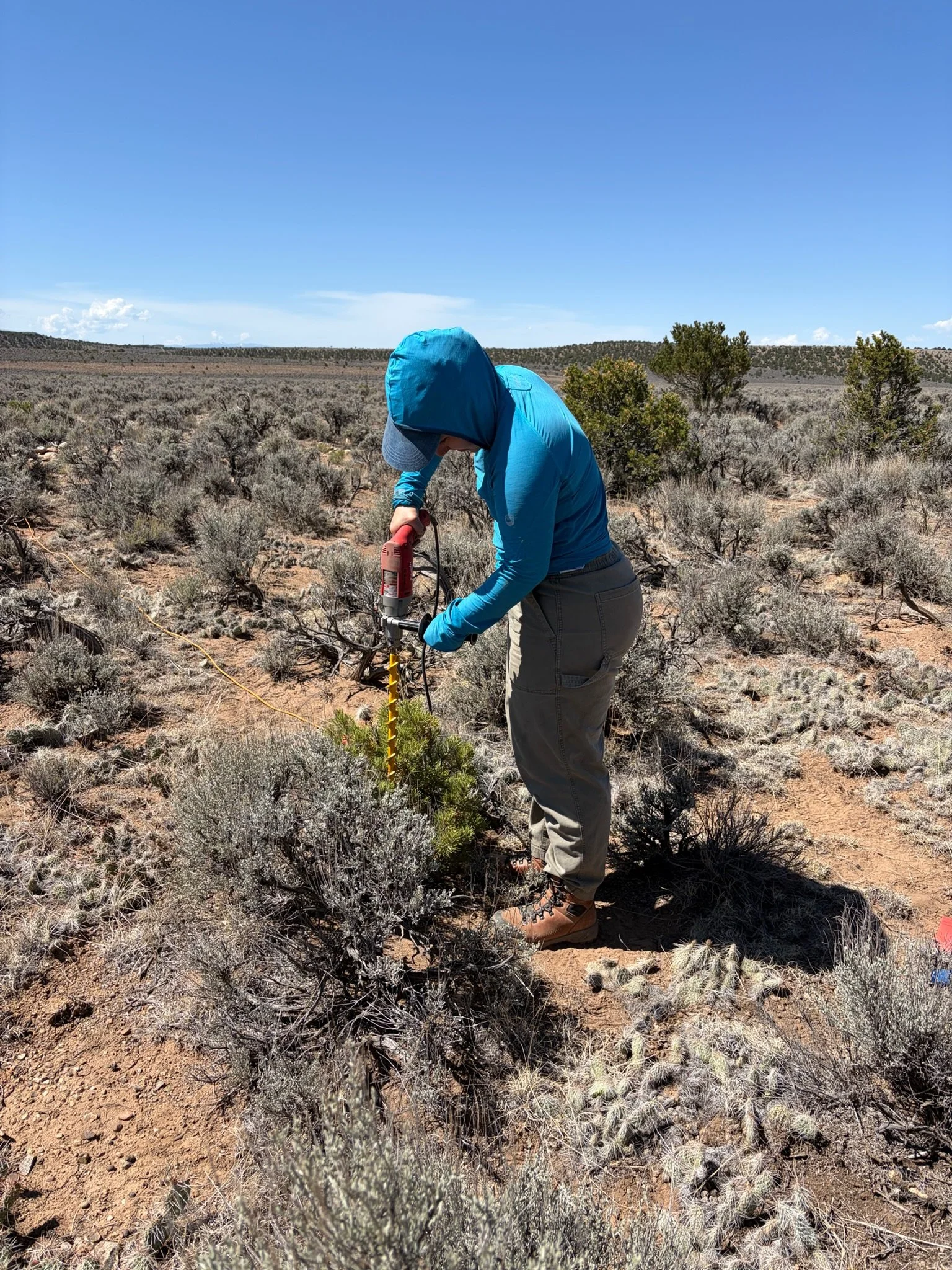
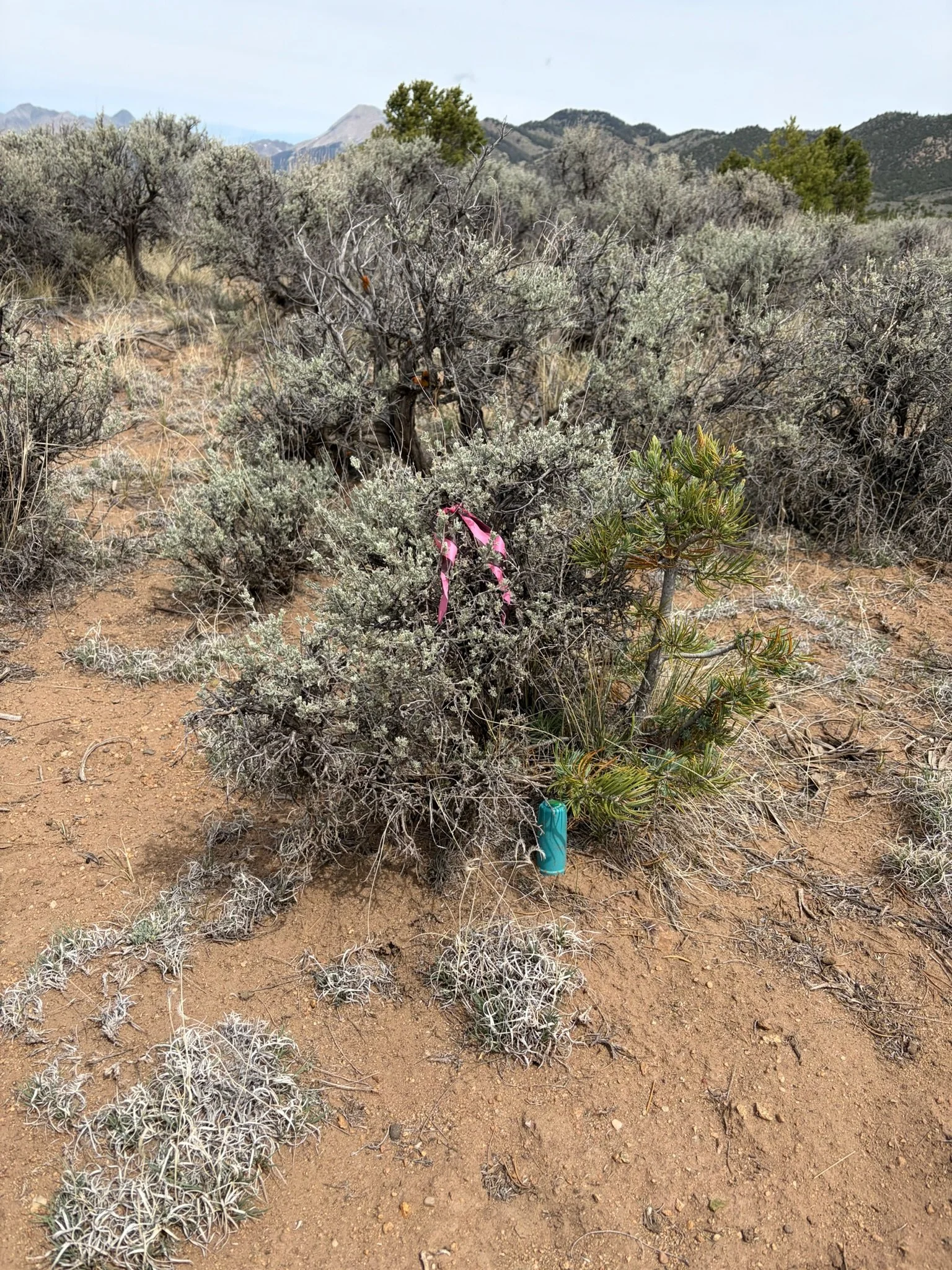
Left: Installing a soil moisture probe. Right: A soil moisture probe installed at a site of a sagebrush-piñon association.
Finally, I am currently building a deep learning model to provide pixel-based quantification of woody plant encroachment into big sagebrush ecosystems in order to better understand the rates of change of woodland expansion over the past century and to understand the drivers of this expansion. There are limitations in aerial photography and satellite imagery, data continuity, and landscapes that complicate these goals, and identifying spread by hand is both time and energy intensive. This model, once completed, will increase our ability to count and identify trees in images with poor quality, resolution, and in challenging landscapes. Our next steps include using results from the model to estimate rates of woodland expansion, compare rates with climatic factors to identify drivers of expansion, and work on lower quality and more multi-modal imagery to extend our time series.
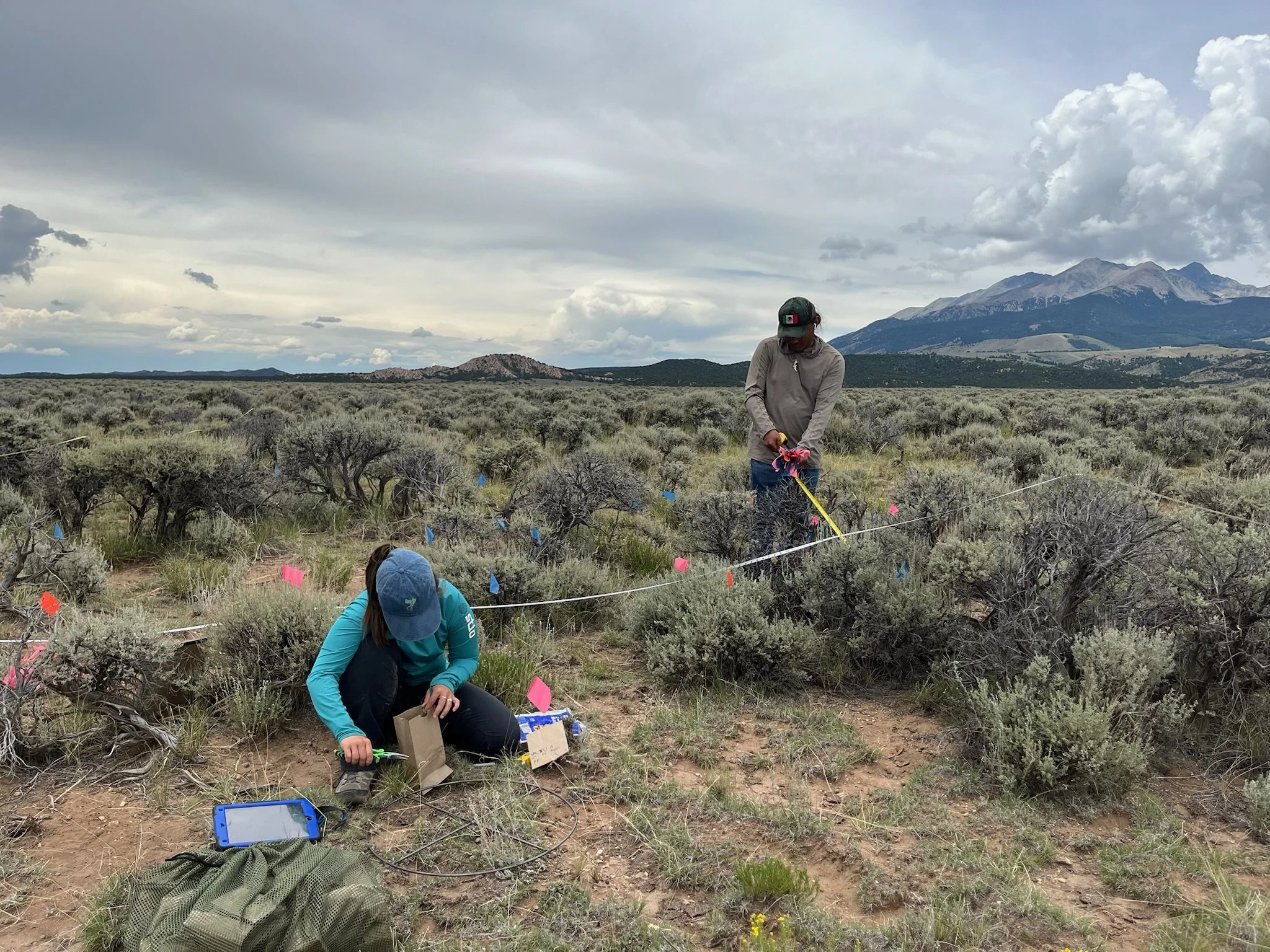
Sampling in south-central Colorado during summer 2025.
I am also working on a project examining the nurse-plant effect in big sagebrush and piñon pine, where big sagebrush facilitate the establishment of piñon pine. There is little information about the role of water balance in this effect, and to address this gap, I placed soil moisture probes at individual sagebrush, at sites of piñon-sagebrush interaction, and in plant interspaces between 2025-2026. With a water addition experiment conducted in 2026, I plan to use these data to examine the role of water balance in the facilitation of piñon pine by big sagebrush. I also plan to use SOILWAT, a process-based ecosystem water balance simulation model, to further expand on these results in order to better understand the mechanisms of piñon expansion.
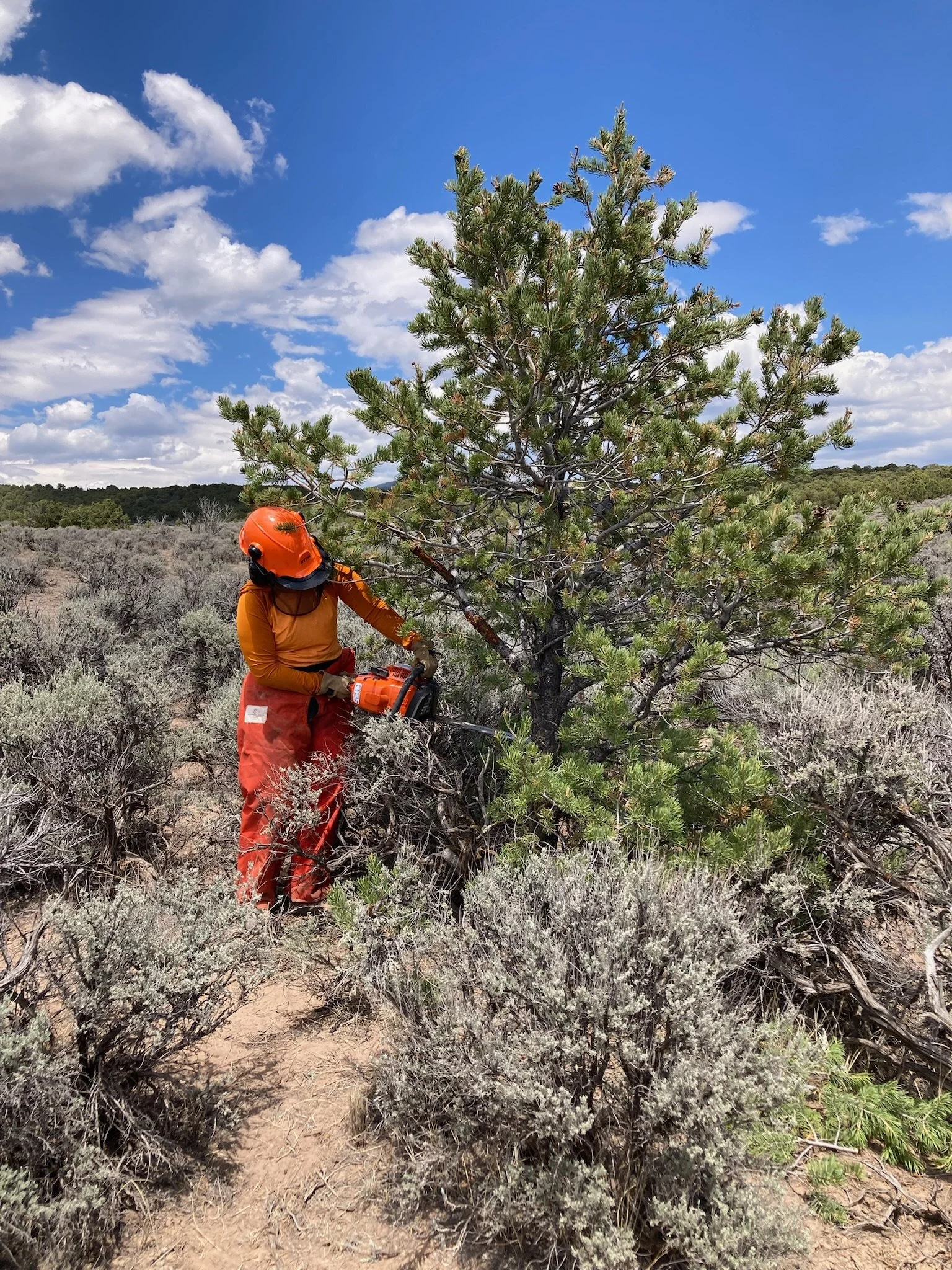
Sampling a piñon pine to determine its age.